U-M Athletics and COVID-19: Oral History of Week That Changed Everything
3/26/2020 3:38:00 PM | General, Men's Basketball, Ice Hockey, Men's Lacrosse, Softball, Women's Gymnastics, Women's Swimming & Diving, Women's Track & Field, Features
By Steve Kornacki and Brad Rudner
ANN ARBOR, Mich. -- It was cool and clear, not bad weather for March 14, and it was scheduled to be the date for the home opener for Carol Hutchins' softball team, a doubleheader against Ball State. The University of Michigan alumni band was supposed to be playing in the stands down the third base line with the seats packed with familiar faces while her players couldn't stop smiling. The coach with more softball wins (1,631) than any coach the sport has had and more victories than any Wolverine coach in any sport knew where she had to be.
"I went over Saturday," said Hutchins. "I said, 'I'm going to go to the field,' and I went and just stood in the dugout. And I feel I have to be a strong leader, but it was like, 'What am I going to do?' I coach this time of year. This is so far beyond my control and my sport. But I do miss practice; I love practice."
However, as you will read in this story, Hutchins has come to grips with the rest of the sports schedule for this school year being canceled about as well as anyone. The COVID-19 pandemic has been life-changing and will have lasting effects.
MGoBlue.com spoke with nine athletic department members to get their thoughts, feelings and views on all of it:
- Warde Manuel, Donald R. Shepherd Director of Athletics
- Darryl Conway, Senior Associate AD and Chief Health & Welfare Officer
- Jerry Clayton, head coach, men's and women's track and field
- Carol Hutchins, head coach, softball
- Mel Pearson, head coach, ice hockey
- Lexi Funk, senior, women's gymnastics
- Peter Hollen, graduate student, men's lacrosse
- Isaiah Livers, junior, men's basketball
- Camryn McPherson, junior, women's swimming and diving
We'll revisit the days and hours before the games were called, the exact moments when cancellations were announced, the immediate aftermath, and the reactions of the past week or so as recalled by Wolverine student-athletes, coaches and administrators.
For the student-athletes, the week of March 9, 2020 began normally. Classes were held, competitions were coming up. Funk was excited for her Senior Night on Friday. Hollen was preparing for a midweek matchup with Marquette. McPherson was trying to qualify for the NCAA Championships. Livers thought his team could make a run at the Big Ten Tournament championship.
But with the news of coronavirus' rapid spread globally, there was a deepening sense that those plans could change at any time.
 Funk: We were looking forward to a good week of training and our Senior Night that Friday. I even posted a picture on Instagram of our senior class. We were excited.
Every day, you saw the news and there were more and more occurrences. It was hard to tell how quick and how fast it would spread. I didn't expect things to get completely canceled.
 Hollen: We had just returned from spring break in California. We lost to Yale, who has one of the best programs in the country. Despite that loss, everyone was excited going into the rest of the season. We were starting to hit our stride.
 McPherson: We left for Lexington (Kentucky, site of the NCAA Zone C Diving Championships) on Tuesday midday. None of us thought the meet would get canceled.
 Livers: We found out on the bus down (to Indianapolis) that there would be no fans. Definitely seemed like something was progressing every 12 hours.
On Wednesday, March 11, the World Health Organization labeled COVID-19 a worldwide pandemic. Clayton, support staff, and the team's qualified runners and field event performers practiced that day in Ann Arbor and flew that evening to Albuquerque, New Mexico, to compete in the NCAA Indoor Track and Field Championships.
 Clayton: Once we got on the plane, I thought maybe we were home free.
Conway had been part of a team tracking coronavirus implications for six weeks prior, and he noted that the Emergency Operations Center at the University of Michigan was activated on Feb. 28. Daily coronavirus meetings started four days later, and discussions to shut down activities and places on campus began in earnest. He was attending a professional meeting Thursday in Chicago when word began spreading, and he had been on conference calls with athletic department personnel as well.
 Conway: It wasn't a matter of if but a matter of when things would close down. From my emergency EMS background, I operate on this: If it's predictable, it's manageable. And I knew this was coming for a couple months because if you looked at what was happening worldwide, you could tell. I knew it had the potential to shut down athletics -- particularly at this time of the year because of all the travel in the month of March. It's unlike any other time of year.
McPherson: On Wednesday, we were informed that Kentucky would be limiting spectators. Divers would have to put parents on a list, and if they weren't on that list, they wouldn't be let in.
Hollen: About 20 minutes before our game, some of the injured guys saw that Yale and the rest of the Ivy League had canceled their athletic activities throughout the end of the semester. After the game, that's when it started to become real.
One of the mothers of a senior on the team told the seniors to take a picture on the block M. That's when a few of us thought, 'This could be the last time.' And it was.

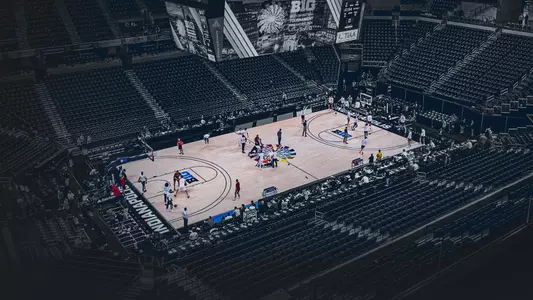
Manuel was scheduled to have a Wednesday conference meeting in Indianapolis on another topic, but that "changed quickly into dealing with the issues around coronavirus," and the athletic directors decided to let fans attend Wednesday night tournament games because crowds already were arriving. The initial plan was to play the Thursday-through-Sunday games with only the families of players attending. But then, after the NBA canceled its season and Nebraska coach Fred Hoiberg left his team's game in Indianapolis feeling ill Wednesday night (he was tested and had another type of virus), Manuel said everything changed. "Anxiety" over the entire situation ramped up.
 Manuel: I had a conversation with (Big Ten) Commissioner (Kevin) Warren at the arena. What happened in the NBA and in our own tournament led to the conversation of "Should we continue our tournament?"
Livers: The night before the game, I was thinking, "How are we going to play in a game when the NBA isn't even playing?" That's when Coach (Juwan) Howard's eyes got big.
Hollen: That night, a few of us were sitting on the couch when, in a matter of a few hours, (actor) Tom Hanks and Rudy Gobert (of the NBA's Utah Jazz) both tested positive and the NBA was stopping the season. We all walked to a house and sat around a bonfire, the majority of the team. Guys were pretty aware of what was coming. We kind of realized this thing was over.
The following day, Thursday, March 12, the rest of the sports world came to a screeching halt as conferences and the NCAA canceled the remainder of winter and spring seasons. The major professional sports leagues followed the NBA and paused their seasons.
McPherson: On Thursday morning, while we were warming up, Mike (Hilde, diving coach) told us that instead of a list, each diver could have one person come and watch. That was a red flag.
Livers: That morning, I thought we'd wake up and see all these cancellations, but there was nothing to that point. We thought we'd play.
Manuel was in Bankers Life Fieldhouse and had previously informed Wolverine coach Juwan Howard "that the game might not be played but to continue on as normal as he could" with pregame warmups.
Manuel: On Thursday morning, I was texting with athletic directors about the possibility of having to cancel the tournament. Then the commissioner called, saying he's had feedback from some of us as ADs, letting us know that he'd had a call with the (Big Ten) presidents recommending that we don't play the tournament. It was quickly becoming an issue of "Do we need to put our kids out on the court to play games?" when this is getting to a level where we are not allowing fans in the stands and they don't want people gathering. The number (limit on the size of gatherings) had gone down from 250 to 10.
Livers: There was no music, no fans, no heckling. We came out almost like we were hyping up our invisible fans, acting like it was a normal game. You could hear the media, all the press people just laughing. I won't forget that.
I went through the line, did one dunk and came back around. Thirteen minutes before tipoff or whatever it was, I saw this dude go up to Chris Hunter (director of operations), who told us to go back in the locker room. Shutting the game down, I saw it coming from a mile away.
Manuel: I came into the locker room at 11:45 (a.m.) and talked to Coach Howard quickly, then he and I addressed the team. I told them that in my life this is the hardest thing the world has had to deal with. "No sport or game is bigger than our health and our lives and safety in participating." I said I was sorry for what the seniors (co-captains Zavier Simpson and Jon Teske) had to go through, and that it was for all of us to do our part. "And our part right now is to not play and not attract crowds to put them in harm's way in a contest played in close proximity to each other. This choice is the right choice for this time, and we will play games again. But now is not the time to do it." Juwan then reiterated the same things.
Livers: Spirits were low. I remember looking at David DeJulius in tears. X (Simpson) was in the corner by himself, Jon is staring up into space. My head was down the whole time in disbelief.

Back in Ann Arbor, Hutchins was going through a hitting drill with three upperclassmen, including senior third baseman Madison Uden.
 Hutchins: I could tell they were concerned over all of this, and so I asked them what their biggest concern was. I didn't know if they were going to say their families or what, but Maddie said, "I'm afraid we're going to lose our season."
Hutchins had to leave practice upon learning of a 3 p.m. head coaches conference call with Manuel, and she found herself hoping that there might only be a one-month shutdown of the season, which was off to a 15-8 start. Hutchins said that, during her 30-minute absence, star pitcher Meghan Beaubien had joked: "Well, Hutch has been in the bathroom for a long time."
Manuel informed everyone that the Big Ten had canceled the rest of the winter and spring sports schedule. About 90 minutes after that, NCAA president Mark Emmert announced that the remaining 2019-20 NCAA championships were canceled.
Hutchins returned from the call, knowing the entire season was over, and watched practice from seats near home plate at Alumni Field, impressed by the "energy" and "care-free" attitude of her team despite the weight they carried on their shoulders. She let her assistants finish drills before coming over to add a squeeze-bunt drill, and then called everyone together in the home dugout on the first base line.
Hutchins: That's where I wanted to tell them. I just said, "There's no good way to tell you this, but this is the deal on the season: It's just been canceled." They were a very heartbroken group. We were all emotional. I mean, what else could they be? They were shocked.
I tried to give them words of encouragement and hope: "This is OK; we're going to be OK." I urged them not to judge these decisions because there are no decisions here. "We have got to do what it takes. It's uncharted water for the entire world. We have got to do our part, and our part is to do what they tell us to do. Let's do what the scientists tell us to do."
The NCAA did the absolute right thing. In my opinion, we were leaders. And we had to do our part. I thought (associate head coach) Bonnie Tholl put it best when she said the seniors' greatest moment was giving up their season and saving lives by all those events that were not played.
It may not have been their choice but sacrificing their season could be their single finest moment in their collegiate careers; possibly saving a life. Perspective is difficult so soon but I can help in reframing the heartache. @umichsoftball #greaterpurpose
— Bonnie Tholl (@btholl) March 14, 2020
Clayton: Andrew Liskowitz and Manning Plater showed me a social media post that the ACC and Big Ten were shutting down and were not going to compete. I told them I had not heard anything officially. But (Wolverine administrator) Jeff Porter had told me to have my phone with me. I told the guys to finish their workout. I went to the packet pickup to get the numbers and information for the team and to get my credential. That was where I was when I got the call from Jeff telling me we were done.
Pearson and his team -- one of the hottest in college hockey -- were to depart that Friday for Columbus, Ohio, to play Ohio State on Sunday in a Big Ten Tournament semifinal. He left Thursday's practice at Yost Ice Arena for the conference call, got the news of the season cancellation in his office, and returned to find practice over.
The Wolverines (18-14-4) had gotten healthy and then got hot. They were on a 9-3-2 run after sweeping Michigan State in the Big Ten Tournament quarterfinals and were No. 14 in the national PairWise Rankings used to select the NCAA Tournament field. It was a finish resembling the one in 2018, when Michigan got it going after another slow start and reached the Frozen Four.
 Pearson: I still had my skates on after finding out it was over, and I went into the locker room and got right to the point. I got emotional. I wasn't planning on getting emotional. But when you look at your seniors and span the room and you're telling them, "We're suspending the Big Ten hockey tournament, and furthermore, even if there is an NCAA Tournament, the Big Ten will not participate in that, effectively ending our season."
With those words, it got to me, and I started looking around the room. All of a sudden, that floodgate opened up, and the dam burst. All the emotions just run through you.
Manuel: Coaches are human and have a rhythm to their life. While they understand and want to protect the student-athletes, they have disappointment, too, when the season doesn't end in the typical fashion. But to a person, they agreed that whatever we had to do to put health and safety first is what we'll do. It's just a great group and all pulling in the right directions for the right reasons. Nobody was angry or frustrated that these were the decisions that we came to.
A defensive lineman at Michigan for Bo Schembechler, Manuel had his football career ended by injury. So, he very well knew the emotions of his student-athletes when the season was over, just like that.

Funk: Bev (Plocki, head coach) pulled me into her office before practice and wanted to get my take on where the team was at with everything, what our mental state was. I said, "If I'm being honest, I don't think it's very good." We all felt something might happen, but we were also preparing as if we'd have a meet the next day.
McPherson: At a meet like this, there's 40 minutes in between dives. You're on your phones. People started to see that conferences were pulling out of NCAAs. For me, by the second round, I was pretty sure NCAAs wasn't going to happen.
It was the second round of finals. I was standing behind the boards with Nikki Canale and heard a few of the guys say, "We're done." I thought, "There's no way. They gotta let us finish." We got through the second round when the Kentucky diving coach got on the loudspeaker and said that the NCAA canceled the rest of the season. Everyone was shocked. Seniors were crying their eyes out.
Hollen: Kids were in tears. The seniors were in tears. For us, we came to realize that it was the last time we'd put on a Michigan jersey or even cleats. It didn't feel real.
Funk: I was devastated. Something that every senior looks forward to is competing in Crisler for the last time in front of your home crowd. Two weeks ago when we had our last home meet, you didn't know it was your last time. You didn't know you would never get another shot at that moment. It's hard to swallow.
McPherson: I was honestly pretty upset but also grateful that I have another year. This happening has changed my view. You can't take things for granted. You have to live and do every meet like it's my last because it honestly could be. I tried my best to be there for the seniors who don't have another chance.
Clayton: Some of the athletes were visually upset; they were seniors. Others reacted differently, but it was quite a blow -- especially for the seniors. For them, this is it.
Pearson: It's especially tough when you look at a guy like Will Lockwood, who had the opportunity to sign last year with the Vancouver Canucks. He made the decision to come back to Michigan, graduate, and spend his senior year as the 100th captain in Michigan hockey history. Looking at him after all he sacrificed and that ... that was tough.
Will's a quiet, thoughtful guy who doesn't say a lot, and like most of the team, he had no questions. It was all shock, a deer-in-the-headlights type thing. But I grabbed him and the seniors after. I told them, "There isn't anything I can say to make you feel better. The only thing that will heal this is time. But I love you guys. I'm very proud of you. We thank you for everything that you've given to the program." I was very sad for them and told them I thought we were destined to do something special.
Conway: For the first two seconds after I found out (from Manuel), it was, "Oh my God, we actually canceled March Madness." My thoughts then immediately went to, "What are we doing on campus?" I got in touch with Greg Harden and Abigail Eiler in athletic counseling to make sure we mobilized the resources to support our student-athletes from a mental health aspect. That was what was the most important to me.
Hollen: I sat on the locker room floor for a while just thinking about it. I said this to my dad: It's an unwritten chapter. This sport was a huge part of my life. But with everything going on, the acceleration of this infectious disease put everything into perspective. It isn't about us or our season. It's about making sure this doesn't take away lives. That was the most important part.
Manuel: Whenever it ends in an odd manner or something like this, it's a shock to the system. It's hard to put into words how much this means to our student-athletes and coaches. Everybody and every sport had to deal with it. It's hard, man.

In the immediate aftermath of hearing the news, there was widespread shock. Seasons were prematurely ended, some right before the biggest events -- postseason tournaments and championships -- of the year. For the seniors, it meant an abrupt and sudden end to careers. For everyone involved, the news was difficult to comprehend.
Clayton: We took the team to dinner at a seafood place in Albuquerque. I think it helped them with our position as a conference once the NCAA came in and put an end to championships for the rest of the school year. I think that definitely made a difference with their response. But there are always things that happen that are bigger than sports, and you need to look at the greater good, the bigger picture. In my 40 years of doing this, I've never experienced anything like this. But the steps that we've taken were necessary. The only way to get control is to do what we're doing.
On the flight back (Friday morning), it was a little tougher because Andrew thought that this was his year to make an impact with shoe companies and such (for possible sponsorships) in his career after college. He was really frustrated that that opportunity to enhance his marketability had been cut short.
Liskowitz won the Big Ten indoor title in shot put and is the Michigan record-holder in the event. Clayton said he was one of three favorites to win that event at the NCAA Championships. Plater finished third in the Big Ten weight throw.
Hollen: I went from winning a game on Wednesday and expecting to go to class Thursday and Friday to being home with a canceled season on Thursday.
Livers: With what I went through this year (with injuries), I fought to get back for one thing only: my teammates. We wanted to play in the postseason. We were all excited to play in the Big Ten Tournament, proceed on to March Madness and make a run. It was all snatched away from us by some virus. It just sucked, but it was something we couldn't control.
McPherson: We were all sad, but it didn't really hit until we got back to Ann Arbor. A lot of the swimmers were already gone. We had to leave. Saying goodbye to everyone at the last minute, that was terrible. Allie Klein went back to Australia, and I have no idea when she'll come back. It's the worst feeling.
Funk: I had to watch my roommate, Polina Shchennikova (student assistant coach), pack up the majority of her room and head out not knowing for sure if she'd come back. We all thought we had another month together. It's hard because you didn't know it was coming.
Livers: When we were saying our goodbyes, we didn't touch each other (due to distancing guidelines to limit the spread of the virus). A lot of air hugs, air fives. Then people got in their cars and went home. It was weird.
Clayton: It's something, a lesson these young people will never forget. You have to keep things in perspective, and it's about family and friends and those relationships. The game will come and go, but the relationships are never-ending.
Hollen: Coach (Kevin) Conry has done a great job saying to us, "No matter what you guys have going on, I'm still your coach and I'm still here for you through everything." He's called and checked on me five or six times. He said that one of the biggest things you learn in sports is sacrifice. You learn to embrace it, and this goes hand in hand. What's happening, it's a lot bigger than us. We're sacrificing our season to help our community.
Hutchins: I'm sorry, but this world has changed. How we get through it, and the sooner we can get to the other side of the curve, is going to help dictate what we can do. But we really have to stay "one-day focused" just like "one-pitch focused."

It's been over a week since sports stopped, and the emotions are still raw. As more cases of COVID-19 are announced by the day, everyone is reacting to the new normal that we, as a world, as a community, find ourselves in.
Hutchins said "only six of my 20 kids are on campus" as of last Wednesday. After seeing a report on spring breakers packing Clearwater Beach in Florida (which has since been closed by Pinellas County), she reminded her team "to follow the guidelines" she'd relayed rather than "behaving recklessly" on their own.
Hutchins: We don't allow looters to loot (during riots), and people who are not following the scientists' guidelines right now are looting. I think I'm going to tweet that out.
She did a "boot camp" with a neighbor in a nearby park with dumbbells and kettle bells, and she has gone for bike rides (one lasting 90 minutes) and long, long walks (two hours one day and nearly 30,000 steps another) while also cleaning her garage and closet.
She's also planning a Zoom session with her coaching staff to discuss keeping their players "engaged" and continues positive dialogue. She's doing conference calls with other college coaches as well to support one another.
Hutchins: We have to be socially conscious and we'll get through this together. But it's not going to be the same world afterwards.
I woke up Friday, the day after the news, and asked, "What am I going to do?" Coaching is what I do this time of year. I'm coming to grips with it, but I feel I have to be a strong leader. But I've had some dark moments, though. I don't want to dwell on it and read all the doomsday stories. I'm worried enough about doomsday. So, I found that being outside lifts my mood a bit. Riding my bike tired me out, and I slept better. I think I'm doing pretty well, but I need social interaction.
Clayton, like the others, has mostly been working from home. He drove last Thursday (March 19) to Opelika, Alabama, to join his wife, Becky, in spending a few weeks visiting family and their young granddaughter, Rylie Clayton, his oldest son Zachary's child. Zachary competed in the discus for his father on Auburn's NCAA runner-up squad and was a starting defensive tackle for the Tigers' 2010 national championship football team before playing briefly for the NFL's Tennessee Titans.
Clayton: I spoke to the team on Saturday (March 14) on things they should do, precautions. Warde allowed us to meet with the teams one last time. As soon as they came to the indoor facility, we put everyone six-to-10 feet apart in the bleachers and did the social distancing. I spoke about that and Coach James (Henry) and Kevin (Sullivan) spoke on the information we'd received from the NCAA. We fielded questions and told them to focus in on academics and put their energy into adjusting to taking online classes. They all asked the same question: "Where are we going to train?" It will depend on what the governor (of Michigan) does and what we do at Michigan.
Pearson is hanging out with his three grandchildren -- Finnley and Isla Thompson and Myles Twork. He sent out this tweet from @CoachPearsonUM after banging on the keys of his wife Susie's piano with them last Sunday:
At this time last night we should of been in Columbus Ohio beating Ohio State ! Bus ride 3 hours , game time 2.5 hours singing the "Victors " awesome . Being at home with my 3 grandkids playing the piano ....Priceless ! ??
— Mel Pearson (@CoachPearsonUM) March 16, 2020
??GoBlue ?????? pic.twitter.com/9YCucH0KGV
He's staying in touch with the players -- "I think even three days later some of them were in shock" -- and said some of his seniors have discussed coming back if the NCAA grants them an extra year of eligibility. Pearson said he was asked by the athletic department to survey his seniors on the topic, but Lockwood signed last Thursday (March 19) with Vancouver.
Pearson: I know Will's happy with that, but you could still hear the disappointment in his voice about what could've been. The Frozen Four was in Detroit, and our guys put a photo in the locker room of Little Caesars Arena and Detroit in the background on a (motivational) mural.
In my 38 years of coaching, this might have been one of the most enjoyable seasons. People might say, 'How in the hell can you say that after your (slow) start?' But we saw the growth and development and saw a team come together. They worked through the issues of losing and injuries and learned perseverance. It was one of my most enjoyable seasons.
Manuel and Conway remain on the job, overseeing the department and student-athlete health and welfare as the pandemic situation changes on a daily basis.
Manuel: It's getting through all the details and helping our student-athletes transition and knowing where they all are. Making sure they've connected with our academic services so they know what they need to do with virtual tutoring. And I'm connecting with the staff through email messages and assuring that my leadership team is connecting with their staffs. I am going to reconnect with my head coaches on a call next week. I've been on conference calls every morning this week with the Big Ten ADs, addressing issues in the Big Ten and NCAA. We're trying to keep it business as usual, but as I said to my staff, that's really a misnomer at this point. We're all trying to work through this in a new normal. We just need to stay connected and that everyone stays safe and healthy.
Conway: It's been basically the virus, 24/7, ever since, making sure we're managing facilities, making sure everything is as clean as possible, and trying to address, predict, manage what's going to happen in the future, and making sure we're prepared for the contingencies that go on. We closed facilities, and now it's more about how we're supporting our student-athletes. We're making sure we can support them remotely both mentally and physically. I wouldn't say doing that is a challenge. I'd say it's different.
Hollen: Until I left Ann Arbor, I felt like I would get a text saying the season was back on, that the facility was back open. Sitting on my plane, I think there were four people on it. It wasn't until I pulled around the corner and into my driveway in San Diego that my career was done. That was it.
Funk: On Monday of last week, I posted a picture of our senior class to get ready for Senior Week. Then on Friday, I was posting a picture commemorating the end of my gymnastics career. Things escalated very quickly.
McPherson: If I sit around, read the news and go to Instagram, it just makes me more stressed out. I'm trying to keep my fitness up, go for runs, take my dogs for a walk. Right now, there's no pools open. It would be nice to get in soon, but at this point, I have to do what I can to stay in physical shape.

Livers: I'm still in Ann Arbor. Doing a lot of workouts at home -- situps, pushups, stretching, anything to keep myself as mobile as possible. When they say it's over, whenever that is, I'll be ready.
Funk: As a gymnast, you don't have any offseason. Even in the summer, we're training new skills, upgrading skills and constantly working to perfect routines. It's weird to have time off to not do anything. It was something I was preparing for in a few months, but I definitely wasn't prepared to do it this soon.
Hollen: Lacrosse isn't about lacrosse -- it's about the people you play it with. Michigan posted this on its Instagram -- this is bigger than sports. If you look at the resources that we, as student-athletes, have access to, it's incredible. People are fighting over food and toilet paper. At Michigan, we have the best health care in the world, safe facilities, food ... anything we need. It puts into perspective how lucky we are.
Pearson: Time will go fast. We'll have the football team on the field and 113,000 in Michigan Stadium. Fall baseball and softball will be going, and the kids will be back in the pool. We'll hear the noise from the soccer stadium and all those things that I can't wait to get back to and return to normal.
Manuel: We're used to sports being the comfort for people to come together and deal with problems. For now, we need distance, and we need to be with our families and connect with people from a distance, whether through video conferencing, phone or email. So, it's not easy. It hasn't been easy to deal with. But we have the right frame of mind and we're going to get through it, and everybody's going to get through it together. How long it's going to take is the unknown of it all. It's hard to figure out because it's all new. But sports will be that connector for our society again.