Day in the Life - Part I: Justin Glanda
10/29/2014 12:00:00 AM | Men's Swimming & Diving

By Brad Rudner
Being a student-athlete is hard work. Between classes and meetings, practices and competitions, the time commitments that student-athletes have to balance on an everyday basis is staggering. The concept of "free time" is a myth.
Men's swimmer Justin Glanda and women's basketball player Nicole Elmblad are seniors, captains of their respective teams and have been more than successful within their respective competitive arena. They also happen to be two of the best students on the entire campus -- Glanda is majoring in business administration; Elmblad in biopsychology, cognition and neuroscience.
What follows is a written account of their average day -- Thursday, Oct. 16, to be exact. We start with Glanda, who wakes up well before most in preparation for a 6:30 a.m. practice.
***
5:32 a.m. -- Most nights, Glanda is only able to get six or seven hours of sleep. If you're a swimmer, this is normal, as are the early wake-up times, which happen five days per week. Luckily for him, he needs only one alarm and zero knocks on his bedroom door to get moving. He grabs a banana, some trail mix and takes a few big gulps of chocolate milk before making the quick two-minute drive on his moped over to Canham Natatorium.
"Something we try to tell our freshmen early on is that you don't ever want to be late," he would say later. "If you are going to be late, you better have a reason, and you better be hustling. If I'm going to say that to them, I have to be on time and ready to go."
6:15 a.m. -- Fifteen minutes before practice starts, Glanda appears on the deck. At this hour, the Natatorium is in a state of serenity. In the corner of the diving well, the seconds silently tick away on an electronic clock that counts down to the next Olympic Games, while the water that those very same Olympic hopefuls will soon be tearing through sits undisturbed. One by one, the swimmers stream out of the locker room and make the slow walk to the northeast corner of the pool to get a copy of this morning's practice schedule and grab the items needed, like fins and paddleboards.
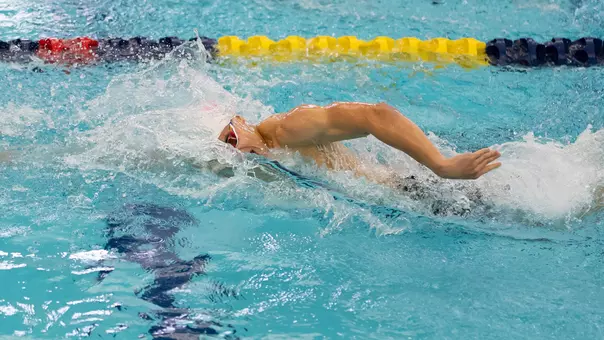
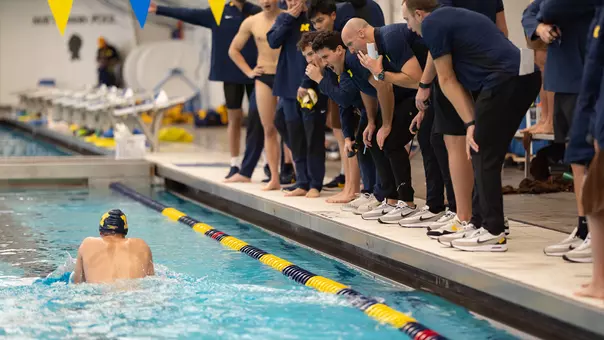
6:32 a.m. -- Glanda eyes the pace clock and shouts something to his teammates to let them know that practice is starting. He's one of the first to dive in.
Outside, the sun hasn't come up yet and won't for another hour or so, but inside, all the lights are on and the music is up. What ends up being played over the speakers is usually picked by the coaches and varies depending on how tough the practice is. The focus of this morning's practice is muscular endurance and aerobic activity, a relatively calm workout designed to focus on volume instead of intensity. So instead of listening to Guns N' Roses, it's The Temptations, Bob Dylan and Elvis.
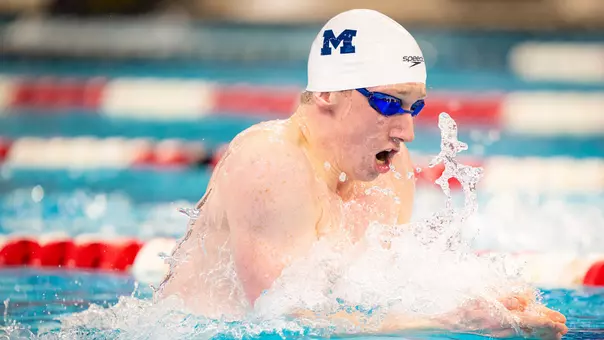
Standing at 6-foot-4 with a slender build and broad shoulders, Glanda is one of the taller guys on the team. Even during the warm-up, he cuts through the water with relative ease. Today's warm-up is 1,200 yards, roughly three quarters-of-a-mile.
The first portion of the practice calls for the use of drag socks, which are made by cutting out the bottom portion of a black mesh bag. When attached to ankles, they provide extra resistance during a kick set, and, judging by some heavy breathing, can be very effective.
7:10 a.m. -- While the distance swimmers stay in the pool, Glanda and the middle distance group moves out of the water and onto the deck, where assistant coach Mark Hill awaits with a series of blue foam mats and six pairs of boxing gloves. It looks like a beginner self-defense course, with each pair of swimmers alternating between rapid punches, running knees and high knees.
Twenty minutes later, the two groups alternate, putting Glanda back in the water. This circuit involves five push-outs (the physical act of getting out of the water), followed by a 50-yard, down-and-back swim and five jump pull-ups at the bars hooked onto the grandstands. This process is repeated several times.
7:45 a.m. -- The last part of practice calls for work with all sorts of equipment. Each swimmer ties a small parachute around their waist, puts fins on their feet and paddles on their hands. Together in unison, the clack-clack of the paddles and the plunges from the fins make it sound like a whirlpool is being fired up for the first time.
Practice ends shortly after 8 a.m. Nearly 20 minutes after getting out of the water, he goes upstairs to the training room to do some recovery work, which today means getting in the cold tub. The water gauge says it's a cool 48 degrees.
Most athletes just stick their legs in, but Glanda submerges nearly his entire body into the tub, with only his head and his toes sticking out. It's an awkward-looking position, one that can't feel comfortable for a whole variety of reasons.
"Your skin is just in pain," he says rather clearly, fighting back any urge to clatter his teeth together in the icy water. "It goes numb. Sometimes it even feels like a burn. Your body doesn't know how to interpret it."
He stays in for eight minutes.

8:50 a.m. -- After grabbing a quick breakfast, Glanda drives up to the Ross School of Business catch up on some work before his first class in just over an hour's time.
When you walk in, you cannot help but be wowed. The lobby is both massive and illuminating, with leather couches and tables scattered about for lounge or study, while ambient light shines through the glass panes high above. It even has its own Starbucks. Go all the way to the top and you'll get an incredible view of campus even on a cloudy day such as this one, as you can see from the Law Quad all the way to Michigan Stadium. It's a stunning piece of architecture that makes the building look like a hotel yet feel like an art museum.
Over the next hour, he'll shift his time between answering the dozens of unread e-mails and skimming over the top swimming websites to see how his team's competitors are doing. He also takes a few minutes to discuss his future, which admittedly is undecided.
"I'm not sure I'll be ready for it [swimming] to end in March," Glanda admits. "As long as I'm having fun and doing well, why stop?"
He segues into describing BLUE Connect, an alumni-undergraduate mentorship program that he helped launch. Though still in its pilot phase, the program, which is not centric to just athletics, has already paired 25 of his teammates with former Michigan swimmers from business to engineering. For instance, Jackson Goethe has been connected to Peter Vanderkaay, and Cameron Stitt to Dan Ketchum. As Glanda puts it, it's an opportunity for undergrads to get advice in the career path of their choice, while giving the alums a chance to stay connected with the team.
10 a.m. -- He heads to the building's basement for the first of his two classes on the day, Support Using Excel. As the title suggests, the class shows students how to use different functions in Microsoft Excel to solve and project hypothetical financial situations. Each student sits in front of their own desktop computer and follows along with the professor.
Today's lesson covers functions relating to investment analysis, income projections and formula auditing. Glanda sits in the front row on the aisle, to the left of junior teammate Nick Killeen. At the edge of the table, he props up a folded piece of paper with his name on it. It's something that's actually required for his next class, but he puts it up anyway. For 90 percent of this class, though, Glanda has his head seemingly buried in the computer screen, doing more listening and processing than anything. Yet, despite the limited opportunities to speak, he's as active as someone can be in this class.
11:36 a.m. -- He arrives at his next class, History of American Business, just a short walk down the hall from his first one. A different-looking room than before, there are three rows of seats formed in a semi-circular shape. Once again, Glanda sits in the front row.
Unlike the last class, groups of students present the day's topic and lead the lecture themselves. Today, he's a participant, learning about monopolies and oligopolies, historical figures like Andrew Carnegie and the industrial processes that make steel.
Within the first few minutes, this class is already more lively than the last. Questions are frequently asked by the student presenters to their classmates and vice versa. Where other students are simply listening, Glanda is both listening and writing, feverishly jotting down pages upon pages of notes. That kind of work ethic doesn't go unnoticed by his professor, who referred to him as "engaging and awesome."
The class ends shortly before 1 p.m. While other students are packing to leave, Glanda stays in his seat, continuing to write.
1:15 p.m. -- After getting a quick lunch at the Michigan Union, he's back at the pool, not even five hours after he left for the first time. Sitting in the team room off deck, he scrolls through his Twitter account and laments on how few followers he has (follow @jrglanda!). With a tough threshold workout looming this afternoon, he takes a few moments to talk about the training.
In the pantheon of athletes, swimmers have schedules that are rivaled by a select few. On some days, they'll spend more time swimming than they will sleeping. It's especially more difficult for college swimmers, who have to sandwich classes and practices in between the early wake-up calls and the late-night study sessions. And then there's the extra stuff that keep those student-athletes in tip-top shape, whether that's time spent in the training room, weight room or academic center. Some days, it's all three.
Amazingly, the rigorous schedule isn't an obstacle for this group. Last year, 23 men's swimmers and divers were given Academic All-Big Ten recognition, tied with rowing for the most selections on any team at Michigan. Given that freshmen and first-year transfer aren't eligible, that's still two-thirds of the roster.
But back to practice. Glanda estimates that on an average day, he'll swim 550 laps, roughly six-and-a-half to seven miles per day. Over an entire week, that's like doing the swimming portion of an Ironman Triathlon nearly 15 times. Thankfully, the practices aren't boring.
"Swimming on your own would be honestly awful," he says, before walking back on deck to get ready for the afternoon practice. "It's easier to do the hardest practice together than it is to do the easiest practice alone."
At 2:30 p.m., he's back in the water. Just like the morning, he's one of the first to make the dive.
The second part of this feature with women's basketball player Nicole Elmblad will be posted on MGoBlue.com tomorrow (Thursday, Oct. 30).