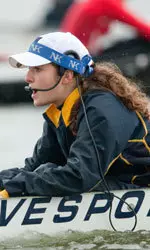
Coxswains: The Quarterbacks of the Rowing Team
5/11/2010 12:00:00 AM | Rowing
May 11, 2010
"Ready to Row"
"Square on the Ready"
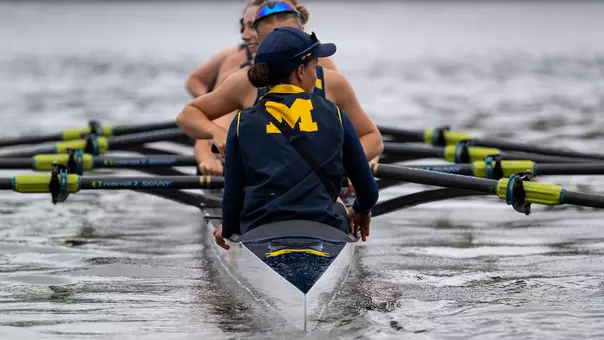
Most people have no idea what these terms mean, but in the world of rowing these are just several commands that a coxswain uses over the course of a race or a practice. Rowing is a unique sport, it's a sport in which all eight rowers have to be on the same page, and not only do they have to be in synch with each other to merely move the boat, but also with the coxswain, who is in charge of steering the boat. The coxswain also makes sure the crew is on the right pace as well as making sure the rowers and the equipment are safe.
Sounds like a big job, right?
The University of Michigan rowing team has six coxswains on its roster and several of them provided insight as to how important the coxswain is in a boat. The average sports enthusiast has no clue about what a coxswain does and freshman Kate Grimaldi described it best.
"A coxswain is like the quarterback," Grimaldi said. "We call the moves, makes the plays in the boat during the race and through practice. It's very much a middle man management position that involves a lot of translation of information between the coaches and rowers."
Coxswains definitely have to have a good relationship with their coaching staffs. It is the coxswain who is in charge of implementing race and practice plans. The coaches develop the plans, but it's up to the coxswains to motivate the crew and implement the plan once in the boat and in some instances, the coxswains have to know when to adapt the plan.
  | |
"The coxswain is almost like an extension of a coach in the boat," said head coach Mark Rothstein. "They know exactly what the coaches are looking for throughout a race or practice and that makes them invaluable."
Coxing is definitely not easy and junior Erica Macke and senior Margaret Deinek shared some of the challenges the coxswains face.
"The biggest challenge to coxing is finding a balance between keeping the boat relaxed and rowing well, but still aggressive and powerful," Macke said. "A coxswain has to find a balance between calling for power and making technical calls and this varies from crew to crew depending on the rowers -- knowing your rowers and knowing what they need to hear when is probably the biggest challenge of coxing."
"Coxswains are responsible for a lot of different things," said Deinek. "We have to make sure everyone knows where they need to be and when to be there, to managing the boats technique during practice to executing or changing a race plan mid-race. For me, juggling the different responsibilities and meeting the expectations of the team and staff is the hardest part."
 | |
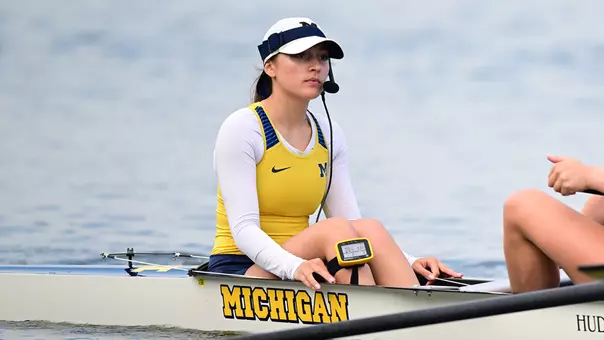
Coxswains are most fondly known as the person that sits at the back or front of the boat and yells instructions and, while it's important that they let the crew know what's going on the most important thing a coxswain does is steer the boat.
One thing about coxswains is that while they have to be well-versed in the technique and technicalities of rowing, you don't have to be the world's best rower in order to be the world's best coxswain. This lends itself to some pretty funny stories when coxswains and rowers pull the old "switch-a-roo." Margaret Deinek and Katie Grimaldi share some funny stories.
Deinek recalls a time when she was forced to row back to the boathouse.
"I am pretty tall and know how to row a little, so one time a rower in a pair was injured at the far end of the lake from the boathouse, and the coaches switched me into the stroke seat of the pair to row the 45 minutes back to the dock," said Deinek. "Pairs are very small, tippy and very difficult to row and the person in the bow will always out pull the person in the stroke seat (even if she is not a rower and the stroke is not a coxswain) and cause the boat to go crooked. It took us a LONG time to get to the dock, but we didn't flip!"
Grimaldi recounts a time when she fell headfirst into the water
"The positions coxswains typically sit in is leaned over and pretty hunched forward. So during a stretch break with my club team last summer, I stood up on the boat to stretch out my back as it had really tightened up throughout practice," said Grimaldi. "It was a hot day (thank goodness), but my stroke seat nodded to my seven seat and both girls pushed their oar handles so that the boat would lean quickly to the starboard side. Naturally, I lost my balance and toppled headfirst into the water."
In short, it's really hard to have a great boat without a great coxswain and the University of Michigan has some GREAT coxswains.