9/8/2026 12:10:00 PM | MGoBlue Podcasts
Brian Boesch • 00:00
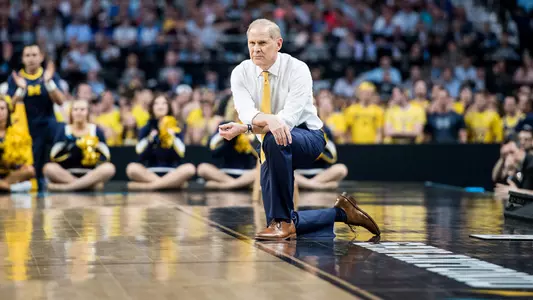
The college basketball season is quickly approaching and we still have plenty to look ahead to. We still have many introductory interviews to share with you. But this week we're going to do what Michigan athletics will do this weekend and that's look back and honor some absolute legends who have come through the University of Michigan. This weekend it's the Hall of Honor induction ceremony and one of the headliners is former Michigan men's basketball head coach John Beilein. It is fitting that Coach Beilein goes in into this Hall of Honor in the same year that Michigan won a national championship because without him, without his teams and his tenure here in Ann Arbor, very likely this would not have happened because Coach Beilein and this incredible run, it helped rebuild the championship foundation on which Michigan won it all in twenty twenty six for Yaxel Lendeborg to be a Big Ten player of the year.
Brian Boesch • 00:59
The likes of Trey Burke and Nick Stauskas, former Big Ten players of the preceded him. How about point guards like Trey Burke, Xavier Simpson and Derrick Walton Junior paving the way for most outstanding player Elliot Cadeau for fellow in state product as Walton was for Trey McKenney. The great big men that John Beilein brought in, Moe Wagner, John Teske and others paving the way for the likes of Morez Johnson Junior And Aday Mara. Coach Beilein always has some fascinating recollections. He is really good at reflecting and remembering some unique moments during his time at Michigan and he also provides some unique insight on the current coaching situation and a whole lot more. We will have all we will have many of the inductees later on this fall on Conqu'ring Heroes. But this weekend to get ready, let's visit with the longtime Michigan head coach John B.
Brian Boesch • 01:59
Line on his time at Michigan, on his Hall of Honor induction and on the program's future. Right here on Defend the Block.
[music builds]
Jeff Laurence • 02:09
We're talking Michigan Basketball. Welcome to Defend the Block where we'll take you inside the basketball programs with interviews, analysis and so much more. Now here's your host Brian Boesch.
Brian Boesch • 02:22
Getting an early start on our Hall of Honor inductee interviews here. And we're doing it on Defend the Block because one of the all time great figures in Michigan basketball history is going into the hall this weekend. It is the great John Beilein. Coach, congratulations. What was it like when you heard you would be inducted into the Hall of Honor?
John Beilein • 02:43
I remember that Warde, I were talking about something on a different subject and he said hey, I want to ask you about something else. I want to talk to you about something else later on. So and then, then he called a couple of weeks later and told me about this. So, you know, this was. These twelve years were everything I could have asked for as a coach. And so it was. It's great, it's a great honor knowing the others have been in there. But there's so many people behind this thing, Brian, that. Because we, we were so close to not making it at one time, you know, and so it was quite a. It was. There were struggles, there's high points and there's low points and. But when you look at it all, it was a beautiful ride.
Brian Boesch • 03:31
You've always been so quick to deflect praise to others and a lot of these types of things, whether it's at Michigan or some of your other great college stops, they have come your way in recent years. How do you take all of this in? What do you expect from the weekend? Because there will be a lot of attention on you and I know that's not the ideal circumstance for you.
John Beilein • 03:53
Well, it's, you know, first of all, you look at my family, you know, all the, just the years you move, we end up moving. What Andy came in his senior year, came to Ann Arbor from Morgantown. Everybody has a transplant and sort of go to Michigan, call Michigan their new home. And they've been through that for forty five years. We moved a lot, we moved around a lot. But it's so grateful to them that the administration, I mean, Bill Martin hiring me was one thing, and then Dave Brandon, Jim Hackett, just incredible job in the transition. And Warde picked up right up where they left. So blessed to have all that. And my presidents, the presidents that I had, you know, they both love basketball and, and that was, that was a great thing too. So just to be a part of this whole thing. And then last but not least. Well, not last of two things are the players. We had an amazing talent come through our place and, and then my assistant coaches, I had a lot of them.
John Beilein • 04:55
We had several get head jobs and so we had a lot of them and they really, they were, they were the backbone of this whole thing because as we said, there was many struggles. I feel like, Brian, we rebuilt it three times within a twelve year period because of. Yeah, you got to rebuild once. Then we had this. All of a sudden, five guys go pro in one year, in two years, and we had to rebuild again. And then it just was really, it was, it was more difficult than. I walk around campus now like we never lost a game. People act, treat me and that's not the truth, man, we lost a lot of games A lot of heartbreakers.
Brian Boesch • 05:37
You've mentioned that fourth season before in several interviews with me and others. I'm curious because you've answered that question before. I think back to that twenty thirteen and twenty fourteen back to back the runner up and then the Elite Eight year that in my opinion that team was just as good as the twenty thirteen team. But then there were some injuries that that had to do with it. But how did you in this program get from that high to getting back to the national championship game in twenty eighteen? Were there similar doubts and moments of,
John Beilein • 06:10
oh yeah, no, it was. I mean you go and you lose twice badly to Michigan State both home and away there in fifteen. It was what is just happened where we had just beaten them several times in thirteen and fourteen. And you said, my God, we're starting all over again. And you try to put pieces together why. And then you realize that, well, you just had five guys who you thought right were, were going to before your players go pro. And then you have your two best players, Derrick Walton and Caris LeVert, both get injured. And so but at the same time, I did not know at the time, well, this is the time for Mo Wagner and Muhammad Ali and these guys to learn and learn the hard way. And if I did, we just, it wasn't like, hey, this is going to lead us to the two to the eighteen national championship game. There's no way I was thinking that I was trying to survive. But it was little did I know what was happening behind the scenes of just, all right, we're starting all over again.
John Beilein • 07:15
And it was really Stu Douglass and Zack Novak again coming in and leading us the first time. So it was very, very, it was fun. But it was heart wrenching that year just losing to teams that we had from going from Big Ten champions, Final Four to all of a sudden not making the NCAA tournament.
Brian Boesch • 07:39
We know the big names, player wise. Trey Burke, Nick Stauskas, Moe Wagner, Xavier Simpson. I could keep going on and on. Same as the plays, right? Trey's shot against Kansas, Jordan Poole's shot against Houston. Is there a player game moment that maybe you're surprised you don't get asked about more or that you felt like should be in a similar wavelength to some of those that have gone into Michigan basketball lore?
John Beilein • 08:05
Boy, that's a, that's a tough question because I remember my, my wife marvels at how I remember little parts of some games and forget other parts and mine might be that the smallest little thing. But I think there when we started to get road wins again in sixteen and seventeen. And, and I think the, the game against Indiana in the second round of the Big Ten tournament with Michigan fans didn't travel as well to the Big Ten tournament in Indiana as they did in Chicago. And we're outnumbered like twenty thousand to one, one thousand in, in Indianapolis. And Duncan, we were down three. Duncan Robinson hits a three from the left corner. All of a sudden we're tied. We get a stop and then Derrick Walton gives up a wide open shot to pass it to a thirty percent shooter, Cam Chatman, and he just drills it. That, that was really a favorite moment of mine because, you know, Cam believed in himself.
John Beilein • 09:15
Derrick Walton was just being a good teammate and Duncan had made a huge shot when, when it looked like, you know, we're going to be, we might be down three and they got the ball and try and stop that with less than a minute to go. So I think that one stands out to me because that all of a sudden the committee's right there in Indianapolis and there we are. We beat the champion at their place. You know, really not at their place, but very Indiana friendly place. To just set the whole tournament off. That was special.
Brian Boesch • 09:50
It's hard to believe, but it's now been almost ten years since the twenty seventeen Big Ten tournament and the plane crash. I, I assume you watch the, the Big Ten network feature here that came out recently. That was one heck of a job. Did not realize the pilot was a Wisconsin fan, which was pretty fascinating as you think back to that almost ten years later. Where does your mind go first now?
John Beilein • 10:16
Man, I think, I think when I look at that always, Brian, I always say culture wins. And because if we don't have the right culture at that time of embracing sudden change like Bo Schembechler's team used to, if we don't have that right culture of, you know, all right, this is really a tough situation, but we're going to make the best of it. And, and then they keep believing it. I mean, the next three years in postseason play we were like nineteen and four in winter go home games starting with that day. So that was, I, I think of that and I, I just think it gave the, our guys the idea, hey, all this little stuff we do about building a culture and, and being great teammates and not just keeping your yourself focused on tough goals, you'll get there. It just sort of cemented it in my mind that if I only coached for a few more years, but I'm not going to change and I'm going to tell every coach that I see how important it is to be intentional about teaching culture every day.
Brian Boesch • 11:26
More with Coach Beilein moments away. But we're in the football season now. Big one coming up on Saturday at the Big House. Michigan and Oklahoma basketball season quickly approaching as well. And you've gotta have your game plan for game day and you can start or end your game day experience, whether it is for Michigan, football, basketball, any of the other great sports on campus at one of Main Street Ventures Restaurant Group locations where they craft sophisticated yet tempting culinary dishes and provide a dining experience both vibrant and inviting. It's what they call exemplified excellence. Head over to Real Seafood company for the freshest fish and seafood. Palio for authentic Italian or the Chop House for premium USDA prime steaks and chops. Whatever the craving, these Ann Arbor locations are ready to satisfy your every desire.
Brian Boesch • 12:15
Full bars, extensive wine lists, craft cocktails, delectable desserts, and at the Chop House, a cigar bar. At Main Street Ventures Restaurant Group, they strive to offer unmatched hospitality to every guest at every location because to them, you're not just a customer, you're their most valued guest. Visit mainstreetventures inc dot com to select your culinary destination and make a reservation. Come hungry and ready for an unforgettable experience. We're with the great John Beilein Hall of Honor inductee coming up this weekend on Defend the Block. You mentioned some of the culture aspects. If you think back the forty five years, what were some of the non negotiables in your coaching, the things that you wanted to get across or require choir that stood the test of time that has allowed you to get all the praise you're getting now Just the
John Beilein • 13:05
top of my head comes just getting great teammates, getting really great teammates. That was, that's part of it. You can, you can teach a lot to even people who are, you know, half and half there. But you, you just get guys based on talent and you don't look at t as teammate, ability as a talent and you just let that go. You're going to get destroyed by that. And as I we ended up looking at all right, how are we going to win? Well, we can't do anything if we don't have the right guys on this bus. And we were so intentional about finding that and then teaching it as we went through those years. And you know, it was sort of by osmosis Brian, before I got to Michigan. And then in year four, backs to the wall, my assistants there, Jeff Meyer and LaVall Jordan and Bakari Alexander, Brian Townsend convinced me, coach, we, we can't do it by osmosis anymore. We got to teach it.
John Beilein • 14:07
We got to speed this up because we're all going to get fired if we don't have a good year this year. And we. We just being intentional about speeding it up just changed everything. But it was. It was always a factor. I don't think I appreciate how important it was until we were intentional about teaching it.
Brian Boesch • 14:27
Anything else that. That John Beilein, the head coach of the Erie Cats, would be surprised that. That the John Beilein that we're talking to today would have done or thought through or. Or try to cultivate as a coach.
John Beilein • 14:43
Yeah, I was. I was. I wouldn't say I was a wild man, but I guarantee you I didn't get one technical a year like I did at Michigan. I mean, I was. I was on the refs a lot. I. I was a. More of a finger pointer. I was very, very demanding of my players. If, If. If our. My Erie players or my Le Moyne players saw my Michigan practice, they'd say, who's that out there? Yeah, that's. That's not. That's not the coach that I know because I was. I was really tough on those guys, trying to get the best out of them. And you know, you know, it's. But what feels good, Brian, is I. I have a reunion with those guys and they're like telling me, no, coach, you. You, like, you changed our lives. You made us all better by that. Just the edge you created with all of us. And then I realized the generations change and you use that same edge, it's not going to work. And you know, in the twenty first century like it did back in nineteen eighty three at Le Moyne or at Erie Community College in nineteen seventy eight.
John Beilein • 15:46
So the only reason I think that we were able to be successful for all those years is that we did embrace change. And part of that is your personality. And it's not important what you know, it's important what you get your team to know. And if you don't have the right body language and tone and things like that, you're not going to get your team to know. And so you have to be able to find that builder relationship with your players so that they trust you. And once they trust you, anything can happen.
Brian Boesch • 16:20
To win a national championship and to do it for the first time in thirty seven years, so many things have to happen. So many people need to be a part of it. Even those who aren't on the roster and on the coaching staff that did it. And what you and your teams did. Helped so much to what this program accomplished back in April. How did you take it in? What are your memories from watching Michigan win at all?
John Beilein • 16:44
Well, it just, you know, there was. I have to admit. There's some envy there when you sit there and watching the championship game and you look around and you see you can't, you can't even think of. I was sitting over there twice and didn't win it. It's like that, that's a little bit of painful. A little bit. I wish I could have, you know, had some do overs in. In some way at the same time. It's like gratifying to know that the pro from the. When the. We took over the program in two thousand seven and Dick Vital had called it the, the most underachieving basketball program in the country and, and it was, it was painful to, to know where we were. Hadn't been to the tournament eleven years and then now all of a sudden the poor head coach, whoever that coach is now, if he doesn't get the sweet sixteen from what we did, what Juwan did, obviously Dusty did, you know, it's like a disappointment.
John Beilein • 17:46
Brian. We came back from winning that, that sweet six or that second round against VCU and, and I took a picture of us in the player development in the Davidson Player Development center because guys, this hasn't happened in twenty one years. Let's get a picture of this. And now it's the norm. That really feels good. That really feels good. That, that program that everybody said don't go to Michigan, that's a bad place. You're not. And you know what? It wasn't such a good place at first. The facilities are bad and, and just they. Four thousand people at our first game. Four thousand. My, my son said to me, tell me again why we came here after we were having, you know, ten thousand every game, West Virginia, no matter who we were playing. And it felt good to get to that point where Juwan and Dusty could have the success that they had.
Brian Boesch • 18:41
So Dusty goes to the NBA. Mike Boynton junior Elevated to head coach. Your thoughts on any surprise you had with D Dusty leaving and your interactions with coach Boynton and what you think about him?
John Beilein • 18:53
Yeah, I mean there's a time in the NBA season that I think all coaches probably say, you know, you know what, their season's over, they're going through the recruiting part or the, the, you know, I didn't deal a great deal at that time with the portal, but it's like. And you're watching the NBA Playoffs in a seven game series and you're like looking at it and said that's pretty cool. They got that guy locked up for five years and you know, they just drafted this guy and they're developing it. So I'm not surprised any coach doesn't look at it at that time. And so I understood it later. The Dusty always that was always a plan. That was never my plan Brian, to go to the NBA ever, ever. I just sort of wore out at college basketball and you know, I had to do it over again. I just would have, shouldn't have retired and but Cleveland just like gave me that opportunity.
John Beilein • 19:47
I said let's go. I wouldn't be at West Virginia now, I wouldn't be at Michigan now when we are so comfortable at West Virginia if I didn't take chances and do something different. And so I saw that it's the same opportunity and no regrets. No regrets. It was that or retired. I had to change the, change the landscape so to speak because there's not a lot. Even Tom Izzo, he's been up there for so long. He didn't be a head coach at forty five years. And I don't care what level it is. I'm the head coach of the JV team at Newfound High School and I'm throwing up before the game saying I can't do this for a living. And forty five years later I was still doing that for a living. So it was time for me to step back from being a head coach and no matter what level it was, but I need to find that out first.
Brian Boesch • 20:32
Little did we know when you left for the NBA, the, the time seemed to be changing and that looks like it was the tip of the iceberg, the peak of the mountain versus all the change that's going on year to year now.
John Beilein • 20:44
Yeah, it was very frustrating for me to try to build a team. Then when you had the second the NBA started guaranteeing second round contracts, agents became legal. It was, and we didn't. There was this long period. Guys could, could go pro and you're trying to offer a scholarship to somebody but you're trying to still keep a scholarship for the guy that's still contemplating going pro. It was like this puzzle right now is, is right now is beyond me. This puzzle is behind me. I, I, I, it's easier to just join them than, than stick with this thing. And, and so you know, it would have worked if I just could have stayed at Cleveland. Just kept going. But my mind and body told me you're going to you're going to coach the NBA for several years and you're going to be dead. So why don't you just like get out of it now so that you can stay alive and enjoy your family.
Brian Boesch • 21:47
Well, we're glad you're able to do that. The last question I'm curious to ask you, you alluded to it earlier, there was a lot of change in leadership during your tenure. That's just kind of how it is in college athletics. Michigan right now is in the process of and will be in the next, you know, half year going through a lot. When you're running a program, you're doing the day to day that's so busy, yet you also have to, you know, you're one of the most important figureheads on campus. What did you try to make sure when there was a new president, new ad to get across to represent for the fan base? How did you act in those spots?
John Beilein • 22:22
That was, you know, when Bill Martin, Bill Martin hired. There's always a feeling of, hey, Bill hired me. He's. He's going to give me time. Right? And certainly we went to the NCAA tournament the second year, but then when Dave Brandon comes in now, the time could be running out. So you're always. And Jim Hackett and everybody. We just did enough to just keep our head above water. You know, Ward came in that like the day that we, we are like the weekend that we qualified for the play in game in Dayton. So it was like, hey, we weren't. Who are we? We had just been the Final Four three years before, but now we weren't even. We're barely qualifying. So you're always, I, I'm a worry Ward anyhow. I just worry about, okay, is this, can we continue to run the program and do it the way we want? The administration support was unbelievable. It just wasn't. Mary Sue Coleman, President Schlissel, just fabulous the entire time that I was there.
John Beilein • 23:20
So that was, that was helpful. But all four ads were very different and I learned from every one of them.
Brian Boesch • 23:27
Well, Coach, we appreciate it. Congratulations. Hope you soak up everything this weekend. And, and good luck with the new role with the Orlando Magic. You are not disproving the whole Michigan Magic thing, but I have to imagine that's a, a nice way for you to stay involved in the game.
John Beilein • 23:41
Yeah, that will, that, that's like right up my alley right now at this time in my life. I think Mike Boynton, by the way, is like the perfect pick. Right guy, right time. I said the same thing about Kyle Whittingham. This is, it is like the future of Michigan basketball is so bright going forward, and I love that Mike's in charge right now and excited about that. And even though I'll be back in the NBA, I'll be watching every Michigan game and every score that I can watch.
Brian Boesch • 24:11
Well, big reason why the future is bright is because the past was so bright. You were a big part of that. Coach, congrats on the Hall of Honor and thanks so much for stopping by.
John Beilein • 24:18
Okay, thanks Brian.
[music builds]
Brian Boesch • 24:27
Really thankful to have John Beilein join us on Defend the Block. And as mentioned off the top, we will have many of the inductees conversations as we do every fall on Conqu'ring Heroes. It's new format on Conqu'ring Heroes. Hope you heard it last week with our debut episode that'll continue coming up this week as well. But Conqu'ring Heroes will have Hall of Honor induction interviews after the fact with many of the other inductees alongside Coach Beilein. So thanks to him. Thanks to all of you for listening. Three more in the trenches this week, getting ready and then recapping the Wolverines and the Oklahoma Sooners. High Noon at the Big House, one of the biggest games in college football this season. Two Blue Bloods at the Big House for Coach B. I'm Brian Boesch. Thanks as always for listening to Defend the Block and Go Blue.
[music builds]
Jeff Laurence • 25:15
Thanks for listening to today's edition of Defend the Block, part of our Michigan Athletics Podcast network, M GO Blue Podcasts. The preceding has been a Learfield presentation of the Michigan Sports Network.